(scroll down for english)
很多年前,接觸了contact improvisation(CI)記得那時的我對於站出來,
在人前,自由地,展現或舞動身體,很不自在,覺得被凝視,覺得是在「表演」。
腦海裡只有批判的聲音,想要一直舞動(doing),身體很緊張的狀態,對於沒有指引亦是十分的迷惘與不知所措。
這次因緣際會下,再次嘗試CI亦是源於一個奇妙的開始。
我在一個呼吸工作坊(Breathwork)認識了來自台灣的sun。是我下課主動去找她聊天的,換上平時的我下課就走了。(當我下了要與人連結的意願之後,我是有努力去行動的,莉莉很棒)後來發現她是教CI的,我下意識感覺這是一個sign。
後來我與她說我也想試CI,經她介紹就到了Moksha上了Sima的CI。
Sima說contact improvisation is life.
我是認同的。
Move with intention
Feel the body
這不是一個表演,是自我意識與身體的一個對話。
每個舞動,一舉手一投足,起意為何?
是發自內心自身的需要?
還是要please 別人?
所有的一切,先回歸自我的身體,move with intention?where do I feel I need to go?
其實也可以是一個moving meditation。
偶爾也會失焦,意識不在當下,飛到遠處,又或是跳了出來再次批判自己,沒關係的,真的沒關係。
看見、接受、再一次回到當下,再一次投入、很好呢,沒有做逃兵。
搞好自己與自己的關係先吧。
然後與另一個獨立的個體相遇,觸碰。
你有「看清楚」或「感覺」這面前的身體嗎?
還是只是你自個兒的投射,一味地與他人要「連結」「接觸」。
你想要被如何對待?別人想要如何被對待?
你是用你自以爲別人想要被對待的方式還是你真的在感受……
一段接觸、一段關係,如何能舒服地做自己的同時,相遇時一起共舞,緣盡了學會放手。
都是Give and take的過程。
在一段關係(舞動)中,你是主動的還是被動的,
aggressive or passive,waiting for invitation or inviting someone.
你有多少的投入,還是你想step back?你是一味地付出然後抱怨對方卻沒發現對方已被你逼到牆角?
磨合(contact)一點都不容易,每個個體都有彼此的習氣,
只是,美麗是,縱使互相磨練互相撕殺,
彼此仍然坦誠地,
一次又一次回到彼此身邊,
互相承託…
Just being,just breath….
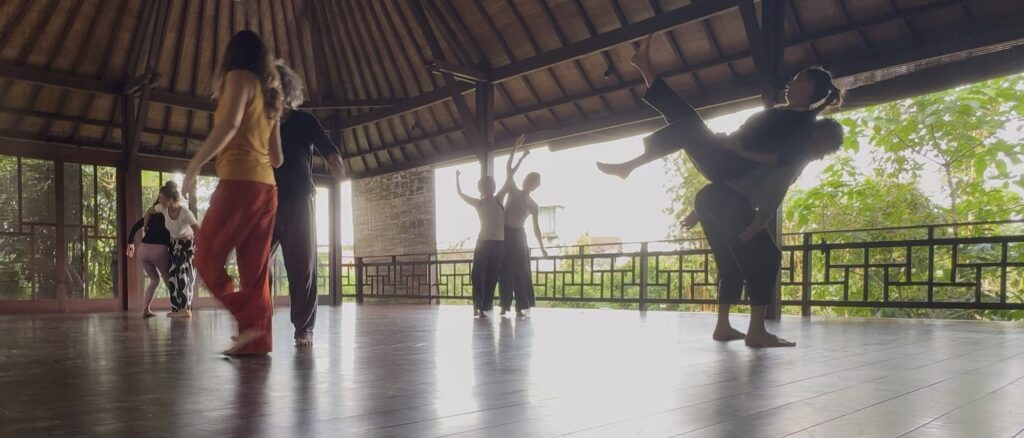
Years ago, when I first tried Contact Improvisation (CI), I remember feeling so self-conscious. Standing out in front of people, moving and expressing my body freely, felt uncomfortable. I felt watched, as if I were putting on a “performance.” My mind was filled with critical thoughts, and I felt this constant urge to keep moving, to keep “doing.” My body was incredibly tense, and without any specific guidance, I felt lost and overwhelmed.
This time, a beautiful twist of fate brought me back to CI, and it all started in a wonderful way.
I met Sun, who is from Taiwan, at a breathwork workshop. After class, I actually initiated a conversation with her—usually, I would just pack up and leave immediately. (Once I set the intention to connect with others, I really made an effort to take action. Good job, Lily!) It turned out she teaches CI, and my intuition told me this was a sign.
When I told her I wanted to try CI again, she recommended Sima’s class at Moksha, so I went.
Sima said, “Contact improvisation is life.”
I completely agree.
Move with intention. Feel the body.
This isn’t a performance; it is a dialogue between your self-awareness and your body. With every single movement, every gesture, what is the underlying intention? Is it coming from your own inner needs? Or is it to please someone else?
Everything begins by returning to your own body. Am I moving with intention? Where do I feel I need to go? It can actually be a moving meditation. Of course, sometimes I lose focus. My awareness drifts away, or I snap out of it and start judging myself again. But that is okay. It is truly okay.
Notice it, accept it, and simply return to the present moment. Immerse yourself once more. It is beautiful that you didn’t run away.
Let’s nurture the relationship with ourselves first.
Only then can we meet and touch another independent being.
Do you truly “see” or “feel” the body in front of you? Or is it just your own projection, blindly chasing a “connection” or “contact” with them? How do you want to be treated? How do they want to be treated? Are you treating them the way you assume they want to be treated, or are you truly listening and feeling?
In a moment of contact, just like in a relationship, how can we comfortably be ourselves while dancing together when we meet, and learning to let go when the connection ends? It is all a process of give and take.
In a relationship—or a dance—are you active or passive? Aggressive or gentle? Are you waiting for an invitation, or are you inviting someone in? How fully are you investing yourself, or do you feel like stepping back? Are you giving endlessly and then complaining, without realizing you have backed the other person into a corner?
Finding a rhythm together in contact is not easy at all. Each person brings their own habits and patterns. Yet, the beauty lies in the fact that even through the friction and the struggles, we still show up honestly. Time and time again, we return to one another, supporting each other…
Just being. Just breathing.
- Make it sound more poetic and lyrical for a journal or social media caption.
- Simplify it into shorter sentences for an easier spoken translation.
- Explore alternative English words for specific concepts like “磨合” (contact/friction) or “互相撕殺” (struggles/i